

Free download: 10 Neuroplasticity Exercises PDF
Grab the free PDF to keep these practices close at hand. Get it here →
What Is Neuroplasticity?
The Mind-Expanding Science of Growing a Better Brain
Have you ever felt completely stuck with your current habits, personality traits, or reactions to stress? For generations, even top scientists believed that the human brain was locked in place after childhood. But modern neuroscience has busted that myth wide open.
When you understand how your brain updates itself, you realize you are never truly “stuck” with who you are today. You are the active architect of your own mind.

1. The Meadow Analogy: How Habits Pave The Way
The absolute easiest way to visualize neuroplasticity in your daily life is to picture your mind as a lush, untouched meadow.
Imagine trying to walk across this wild meadow to a new spot. The tall grass is thick, pushing through it is slow, and it takes a lot of effort. If you only walk this route once, the grass simply springs back up behind you. This is what it feels like to try a new positive habit once (like meditating or pausing before reacting in anger), it feels clumsy at first and leaves no permanent mark right away.
If you commit to walking this exact same path every single day, your footsteps begin to flatten the blades and wear away the roots. Soon, a visible dirt trail starts to take shape. In your brain, this means you are firing the same group of neurons repeatedly, beginning to form a real physical circuit.
Keep walking that trail for months, and eventually, the city steps in to pave it over. Now, you can walk it effortlessly, perhaps even with your eyes closed. The new behavior has become your default automatic reaction. It is no longer something you have to actively “force” yourself to do, it has been physically wired into your brain’s structure.
2. Incredible Proof: Stories of the Adaptive Brain
If this sounds too good to be true, the real-world proof of neuroplasticity is nothing short of miraculous. These two classic studies show exactly how moldable the brain really is:
The London Taxi Drivers
Before GPS, London cabbies had to pass a legendary test called “The Knowledge,” memorizing 25,000 labyrinthine streets and thousands of landmarks. When neuroscientists scanned these drivers’ brains, they found that their hippocampus (the area responsible for spatial memory) was physically, noticeably larger than the general public’s. The longer a driver spent navigating the complex streets, the larger that area of the brain grew. Their physical demands literally expanded their brain’s hardware.
Brett’s Musical Speech Re-Route
After a severe skiing accident, a college student named Brett was left with massive damage to the left hemisphere of his brain, completely losing his ability to speak. To help him recover, therapists bypassed his damaged left side entirely using music. Because the right side of our brain processes singing and melody, Brett learned to sing his thoughts before he could speak them. Over time, those neural pathways rewired so robustly that he fully regained fluent, normal speech.
Conscious Cues
Neuro-
plasticity
Exercises
5 physical ways to rewire your mind.
Want to start training your brain today?
Download our quick-start PDF workbook featuring 5 practical, evidence-based neuroplasticity exercises you can easily build into your daily routine.
Get The Free PDF Workbook3. Under the Hood: The Simple Biology of Change
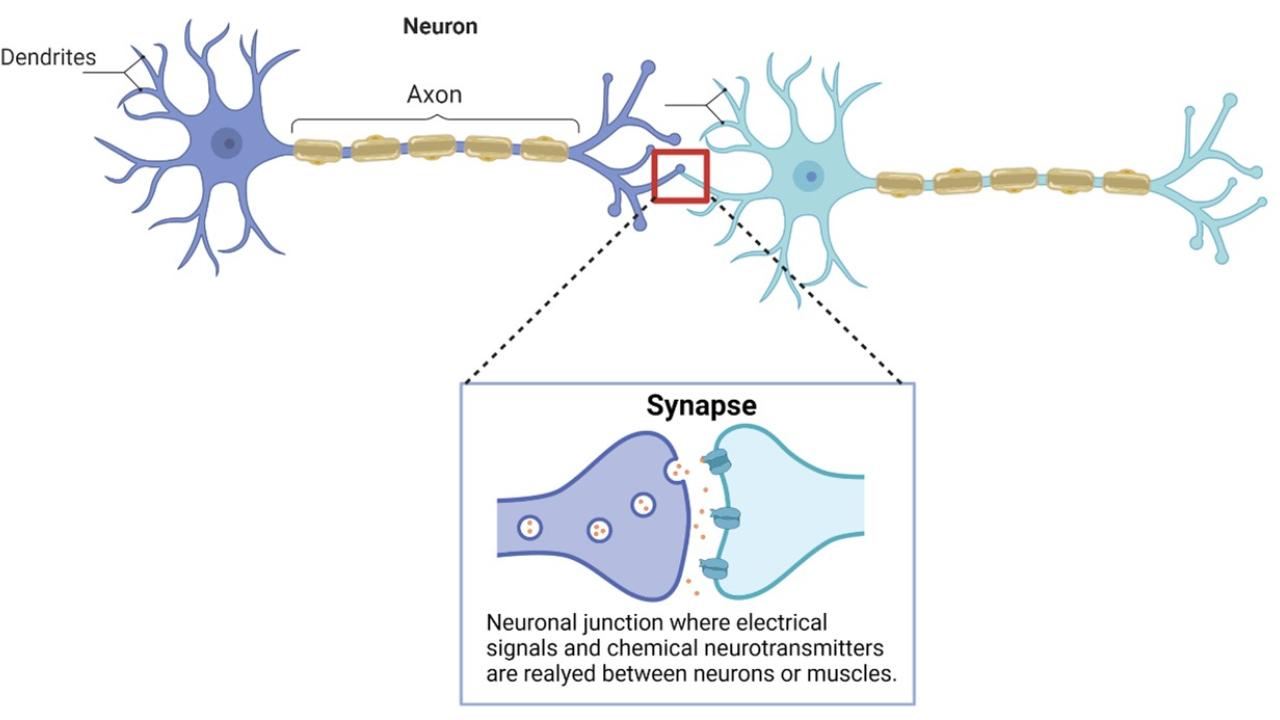
Inside your skull resides an incredibly complex web of 86 billion brain cells called neurons. They communicate by firing tiny chemical and electrical impulses across microscopic gaps called synapses. To rewire this massive network, your brain depends on three simple biological mechanisms:
| The Brain Mechanic | What Is Physically Happening? | Why It Matters to You |
|---|---|---|
| 1. Myelination (Paving the highway) |
When you repeatedly fire a neural circuit, your brain wraps that path in a protective fatty insulation sleeve called myelin. | Signals travel up to 100 times faster along insulated pathways, allowing a conscious effort to transform into an effortless, automatic reflex. |
| 2. Synaptic Pruning (Clearing the weeds) |
Your brain is highly efficient. If you stop firing a specific connection, it weakens the path over time and clears the old wiring away. | This explains why unwanted habits and anxious thought patterns fade away once you stop feeding them attention and focus. |
| 3. Neurogenesis (Sprouting new seeds) |
An area in the center of your brain called the hippocampus actually grows fresh, brand-new neurons throughout your adult life. | You are never limited to an old stock of brain cells; you are constantly producing raw material to learn, grow, and adapt. |
4. Structural vs. Functional Plasticity
To understand how these changes shape your life, it helps to know that neuroplasticity occurs in two distinct ways:
Functional Plasticity
This is your brain’s ability to move functions from a damaged or weak area to a healthy, undamaged area. When one area goes dark, another area steps in, acts as a backup, and learns to coordinate that same task.
Structural Plasticity
This is the physical restructuring of your brain’s anatomy. Based on what you focus on, learn, and practice, your brain actually grows new connection points, changes its shape, and increases its density.
5. The Mindful Nuances of Neuroplasticity
To make neuroplasticity work for you instead of against you, there are two crucial concepts that almost everyone misses:
1. Redirecting “Unwanted Wiring”
Your brain is entirely neutral. It doesn’t decide whether a neural path is good or bad; it simply streamlines whatever you practice. If you spend hours every day worrying, overthinking, or practicing irritation, your brain will wrap those paths in myelin. You will become exceptionally good at stressing out because you have built a high-speed interstate system for it.
To change this, you don’t have to fight your thoughts. Simply divert your focus. Every time you consciously interrupt stress with a deep, slow breath, you start letting the old pathways fade through synaptic pruning.
2. Respecting the “Construction Zone Slowdowns”
Have you ever practiced a new habit or mindset for a few weeks, only to completely slip up when you were tired, stressed, or sick? Many people panic and think, “I’m regressing! This isn’t working.”
It is working. When your brain is in the middle of building new neural highways, those paths are still under construction and require high levels of conscious energy. When you are depleted, your brain defaults back to the old, pre-paved highway to save power. This isn’t a permanent setback; it is just a temporary construction delay. Give yourself grace, rest, and pick back up the next day.
6. The Mind-Rewiring Playbook: 3 Daily Keys
You do not need to overcomplicate things to start guiding your brain’s growth. Focus on these three foundational rules:
1. Deliberate Attention
Passive actions do not trigger structural changes. To carve a path, you must pay active attention. If you are practicing a new positive behavior, do it with full intention, presence, and focus.
2. Embrace the Friction
When a new routine feels awkward, slow, or uncomfortable, your brain isn’t broken. That is the physical sensation of your feet stepping off the paved highway into the tall grass. Expect that friction, and keep going.
3. Prioritize Deep Rest
Your brain does not physically cement its new connections while you are actively practicing. It locks in those changes, wrapping your new pathways in myelin, during deep sleep and quiet down-time. Consistency and sleep are your super-powers.
The Takeaway: You are not defined by the pathways you built yesterday. Your brain is built to adapt. By showing up consistently, welcoming the initial discomfort, and getting proper rest, you can shape your mind into your greatest partner.
Ready to try some real mental training exercises?
Access the Advanced Neuroplasticity Exercises Master-List →
Frequently Asked Questions
What is neuroplasticity?
Neuroplasticity is the brain’s ability to reorganize itself by forming new neural connections in response to learning, experience, or injury. It’s why you can build new habits, recover skills after injury, and change ingrained patterns of thought at any age.
Does neuroplasticity decrease with age?
The brain is most plastic in childhood, but research shows it retains meaningful plasticity throughout adulthood and into older age. It simply takes more deliberate, repeated practice to create lasting change later in life compared to childhood.
What activities boost neuroplasticity the most?
Learning new skills (like a language or instrument), physical exercise, quality sleep, novel experiences, and deliberate practices like meditation are among the most well-supported ways to encourage neuroplastic change, since they all require the brain to form new connections.
Can neuroplasticity reverse negative thought patterns?
Yes, in principle. Because repeated thoughts and behaviors strengthen the neural pathways behind them, consistently practicing new, healthier responses can gradually weaken old patterns and build new ones, though it usually requires sustained effort over weeks or months.
What is neuroplasticity and how does it work?
Neuroplasticity is the brain’s ability to physically reorganize itself by forming, strengthening, or pruning neural connections in response to experience, learning, or injury. It works through repeated activation of certain neural pathways, which strengthens them (often summarized as “neurons that fire together, wire together”), while unused pathways gradually weaken.
Is neuroplasticity supported by peer-reviewed research?
Yes — decades of research, summarized by sources like the National Library of Medicine, confirm the brain retains meaningful plasticity throughout life. For hands-on ways to apply this, see our guide to neuroplasticity exercises.
Related resources

10 Neuroplasticity Exercises PDF – Science-Based Practices
Rewire Your Reality: 10 Research-Backed Neuroplasticity Exercises That Actually Work

The Feelings Wheel | List of Feelings – Understanding Your Emotional Intelligence
List of Feelings: 91 Words for What You’re Actually Feeling (Free PDF)

Psychologist • Certified Kundalini Yoga Instructor
Manuel Alejandro Patiño is a psychologist and certified Kundalini yoga instructor who works where clinical psychology, somatic practice and contemplative tradition meet. He is a certified practitioner of heart-rate variability biofeedback and pulse analysis. He reviews Conscious Cues resources for clinical accuracy.

Neuro-Somatic Educator • Founder, Conscious Cues
Jordan Buchan is the founder of Conscious Cues and a Neuro-Somatic Educator whose work focuses on the process of turning insight into lived experience. She helps people move beyond simply understanding themselves and into embodying real change so what they know begins to shape how they feel, respond, and live.