
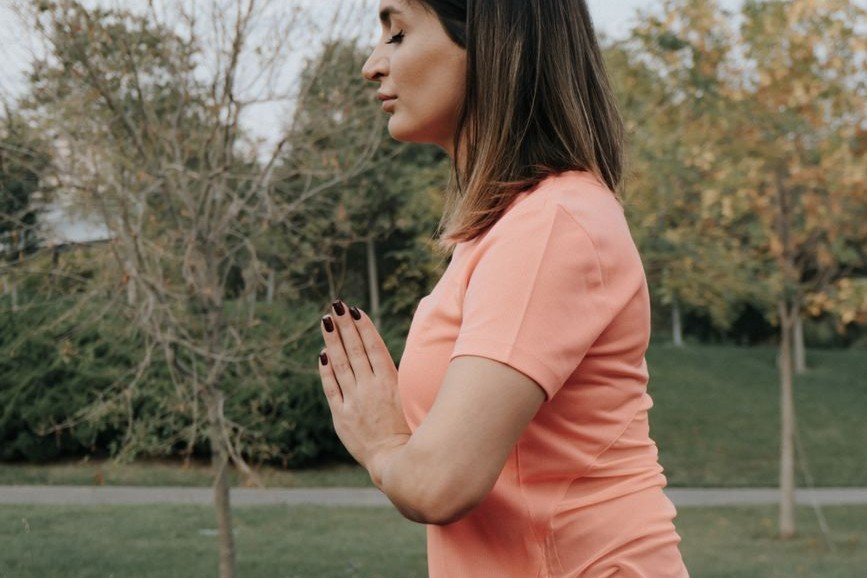
Explore the Resource Center
Browse our full library of free worksheets, meditation scripts, and PDF guides. Visit the Resource Center →
Breathing Exercises for Stress Relief
Simple breathing exercises for stress relief work because they directly signal your nervous system to shift out of fight-or-flight and into a calmer, more regulated state.
Advanced Breathwork for Stress Relief
These effective techniques are designed for both beginners and experienced practitioners. They don’t just provide practical guidance, they explain why they work to enhance emotional regulation and nervous system balance. For the fuller science behind this, see How to Regulate Your Nervous System.
⚠️ Breathwork Cautions
- Retention Warning: Holds (like 4-7-8) may cause dizziness. Start slow.
- Medical Conditions: Consult a doctor if you have asthma, COPD, or heart conditions.
Technique Navigator
Resonance Breathing (Coherent Breathing)
Description: Resonance breathing involves slowing your breath to 5-6 cycles per minute. This pace is ideal for syncing your heart rate and breathing patterns, promoting a state of coherence in your body.
How to Practice: Sit comfortably with your back straight or lie down. Close your eyes. Inhale deeply through your nose for a count of six. Exhale slowly through your nose for a count of six. Continue for 5-10 minutes.
Visualization Cue: “Imagine a pendulum swinging slowly and steadily with each inhale and exhale. Let your breath match its rhythm.”
Why it works: Stimulates the vagus nerve and regulates the parasympathetic nervous system. It directly controls Heart Rate Variability (HRV). High HRV equals more resilience. A 2017 study demonstrated this reduces anxiety and stabilizes blood pressure.
↑ Back to Navigation Table4-7-8 Breathing (Relaxation Breath)
Description: Encourages relaxation and prepares the body for sleep or immediate stress reduction.
How to Practice: Inhale through your nose for 4. Hold your breath for 7. Exhale slowly and fully through your mouth for 8, making a soft “whoosh” sound. Repeat 4-5 times.
Imagery Cue: “Picture your breath as a wave gently washing away tension from your body with every exhale.”
Why it works: The prolonged exhale stimulates the parasympathetic nervous system. Holding increases CO₂ levels, which can improve oxygen exchange and enhance feelings of calm.
↑ Back to Navigation TableAlternate Nostril Breathing (Nadi Shodhana)
Description: Yoga-based practice that balances energy and clears mental clutter.
How to Practice: Close right nostril with thumb, inhale left. Close left with ring finger, exhale right. Inhale right, close, exhale left. Continue for 5 minutes.
Cue: “Imagine the air flowing like a gentle stream, cleansing and balancing both sides of your body.”
Why it works: Balances brain hemispheres and lowers blood pressure. A study in Medical Science Monitor Basic Research showed improved attention and reduced systolic pressure after 18 minutes of practice.
↑ Back to Navigation TableBumblebee Breath (Bhramari)
Description: Uses a humming sound to soothe the nervous system and quiet the mind.
How to Practice: Inhale deeply through nose. Close lips and make a low humming sound like a bee as you exhale. Focus on the vibration. Repeat 5-7 cycles.
Imagery Cue: “Feel the vibrations as ripples of calm radiating through your body, dissolving tension.”
Why it works: Humming stimulates the vagus nerve. A 2022 pilot study using Holter monitoring showed humming generated the lowest stress index compared to other activities.
↑ Back to Navigation TableThe Lion’s Breath (Simhasana)
Description: Dynamic technique to release pent-up energy and tension.
How to Practice: Sit on heels. Inhale deeply. Open mouth wide, stick out tongue, and exhale forcefully with a loud “haaa” sound. Repeat 5-7 times.
Cue: “Picture stress as steam escaping from a teapot, leaving you lighter and more energized.”
Why it works: Engages the diaphragm and releases stored tension in the throat and face, encouraging emotional release.
↑ Back to Navigation Table5-4-3-2-1 Sensory Breathing
How to Practice: Inhale (notice 5 things you see). Hold (feel 4 things). Inhale (name 3 sounds). Exhale (2 things you smell). Final deep breath (1 thing you taste).
Why it works: Breaks the loop of stress-inducing thoughts by anchoring you in the physical present moment.
↑ Back to Navigation TableCircular Breathing
Description: Continuous breathing without pauses between inhale and exhale.
How to Practice: Inhale through nose, exhale through mouth in a gentle flow. Immediately begin next inhale. Continue 3-5 minutes.
Cue: “Imagine your breath as an unbroken circle of energy.”
Why it works: Induces a state of flow. Research (Corvacho et al.) suggests breath-induced shifts in CO₂ link to profound psychological benefits and improved mood.
↑ Back to Navigation TableThe Balloon Breath
How to Practice: Hands on belly. Inhale (visualize inflating a balloon in your stomach). Exhale (imagine it deflating). Repeat 5-7 breaths.
Cue: “Imagine the balloon carrying stress away, leaving your body light and free.”
Why it works: Deep diaphragmatic breathing reduces stress biomarkers like cortisol and improves mood (Review on PubMed).
↑ Back to Navigation TableLadder Breathing
How to Practice: Inhale/Exhale for 2 counts. Then 3 counts. Increase to your max, then descend back down.
Why it works: Builds focus and extends lung capacity while the gradual rhythm soothes the mind.
↑ Back to Navigation TableGentle Hold Breathwork
How to Practice: Inhale (4 counts). Hold (4 counts). Exhale (4 counts). Hold at bottom (4 counts). Repeat 5-7 cycles.
Cue: “Feel the pause as a moment of calm, like the quiet between ocean waves.”
Why it works: Enhances mindfulness and improves tolerance for discomfort. Meta-analysis shows structured pacing of holds supports significant mental benefits.
↑ Back to Navigation TableMoon Breathing (Chandra Bhedana)
Description: A calming left-nostril technique from yogic tradition for nighttime anxiety.
How to Practice: Close right nostril. Inhale left. Close left, exhale right. Return to inhaling through left only. Repeat for 5-10 minutes.
Cue: “Feel the cooling energy of the moon enter through your left nostril.”
Why it works: Left-nostril breathing activates the rest-and-digest response. Studies show it reduces heart rate and promotes parasympathetic dominance.
↑ Back to Navigation TableCyclic Sighing
Description: Proven more effective than meditation or box breathing for reducing anxiety.
How to Practice: Inhale deeply through nose. Take a second shorter inhale to fully expand. Slowly exhale through mouth. Repeat for 3-5 minutes.
Cue: “Imagine letting go with each long sigh, like tension melting off your shoulders.”
Why it works: Stanford research showed this produced the greatest reduction in anxiety and significantly lowered resting respiratory rate.
↑ Back to Navigation TablePursed-Lip Breathing
Description: Clinically backed method used to improve oxygen flow and reduce panic.
How to Practice: Inhale through nose for 2-3. Purse lips like blowing out a candle. Exhale slowly for 4-6 counts.
Cue: “Let your breath flow out like a soft candle flicker, steady and smooth.”
Why it works: Used in pulmonary rehab to increase airway pressure and improve oxygen exchange, easing panic.
↑ Back to Navigation TableSummary Guide
Frequently Asked Questions
What breathing technique works best for stress relief?
Diaphragmatic (belly) breathing with an extended exhale, such as inhaling for 4 counts and exhaling for 6-8, is one of the most well-researched techniques for quickly activating the body’s relaxation response.
How often should I practice breathing exercises for stress relief?
Practicing for even 5 minutes, once or twice daily, builds a stronger baseline of calm over time. Many people also use breathing techniques reactively, in the moment stress arises, for quick relief.
Can breathing techniques replace other stress management methods?
Breathing techniques are a powerful, accessible tool, but they work best as part of a broader stress management approach, alongside good sleep, movement, and social support, rather than as a sole solution.
Why does slow breathing calm the body down?
Slow, deep breathing, especially with a longer exhale, activates the vagus nerve and the parasympathetic nervous system, which directly counteracts the fight-or-flight stress response and lowers heart rate and cortisol.
What is the most effective breathing technique for stress relief?
Deep diaphragmatic breathing with an extended exhale (for example, inhaling for 4 counts and exhaling for 6-8) is among the most well-researched techniques for quickly activating the body’s relaxation response and lowering cortisol.
Related resources
10 Unique Breathing Exercises for Anxiety You’ve Probably Never Tried

Grounding Techniques for Anxiety
10 Somatic Exercises for Anxiety: Body-Based Tools for Stress, Panic, and Overwhelm

How to Regulate Your Nervous System

Neuro-Somatic Educator • Founder, Conscious Cues
Jordan Buchan is the founder of Conscious Cues and a Neuro-Somatic Educator whose work focuses on the process of turning insight into lived experience. She helps people move beyond simply understanding themselves and into embodying real change so what they know begins to shape how they feel, respond, and live.

Psychologist • Certified Kundalini Yoga Instructor
Manuel Alejandro Patiño is a psychologist and certified Kundalini yoga instructor who works where clinical psychology, somatic practice and contemplative tradition meet. He is a certified practitioner of heart-rate variability biofeedback and pulse analysis. He reviews Conscious Cues resources for clinical accuracy.