
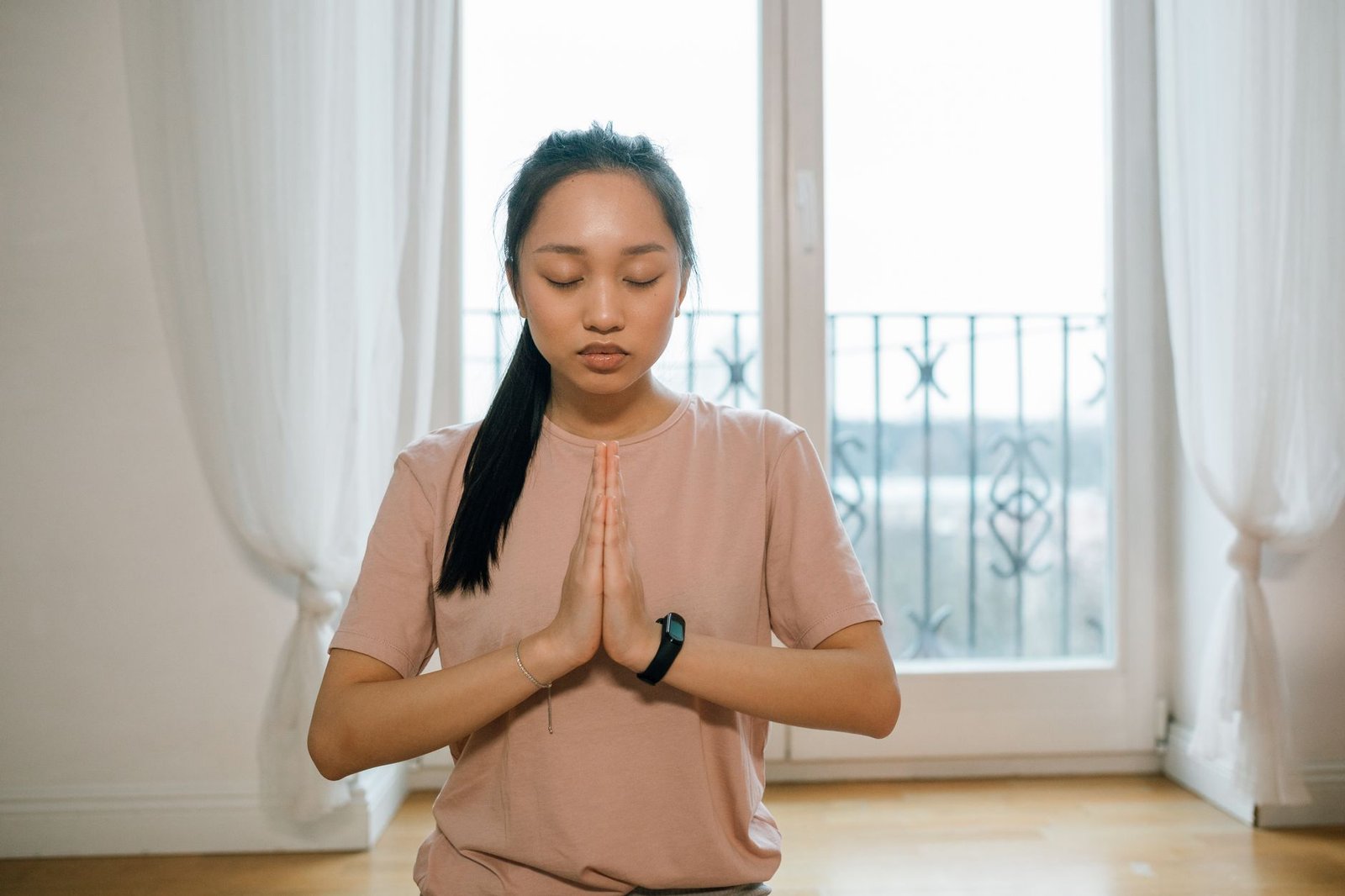
Explore the Resource Center
Browse our full library of free worksheets, meditation scripts, and PDF guides. Visit the Resource Center →
What Is Circular Breathwork?
Circular breathwork is a style of breathing where the inhale and exhale are connected in one continuous loop, with little or no pause between them. Instead of breathing in the usual pattern of inhale, stop, exhale, stop, you keep the breath moving. That simple shift changes the experience a lot. It can make you feel more alert, more emotional, more aware of your body, or, sometimes, unexpectedly confronted with what has been sitting underneath the surface. Breathwork research as a whole suggests breathing practices can help reduce stress, anxiety, and depressive symptoms, though the evidence is mixed in quality and depends heavily on the specific method being used. For the broader fundamentals of body-based breathing practices, see What Is Somatic Breathwork?
In practice, circular breathwork is both simple and not simple at all. The mechanics are straightforward. The experience can be anything but. For some people it feels energizing. For others it feels emotional, cathartic, spiritual, tender, disorienting, or deeply clarifying. Sometimes it feels like nothing dramatic happened, but afterward there is more softness in the body, more space in the mind, or more access to feelings that were previously buried under tension and momentum. The point is not to force a big experience. The point is to create conditions where the body and nervous system can reveal more of what is already there.
A Simple Beginner Exercise You Can Try Right Now
Before getting into history or theory, it helps to feel the basic shape of circular breathing in your own body.
- Sit or lie down somewhere comfortable where you will not be interrupted for a few minutes.
- Place one hand on your chest and one hand on your belly.
- Inhale gently through your mouth or nose for about 3 to 4 seconds.
- Exhale for about 3 to 4 seconds.
- Now begin to connect the breath so the inhale rolls straight into the exhale, and the exhale rolls straight into the next inhale, without holding in between.
- Keep the breath soft and steady for 60 to 90 seconds.
- Then let your breathing return to normal and notice what changed.
That is the basic architecture of circular breathwork: a continuous loop. You do not need to make it dramatic. You do not need to breathe as hard as possible. In fact, for beginners, gentler is usually better.
What Circular Breathwork Actually Is
Circular breathwork is an umbrella-style term often used for breathing practices that involve a continuous, connected breath, usually through the mouth, sometimes through the nose, and often for a sustained period of time. Different schools use different names, pacing, body positions, music, and frameworks, but the common feature is the same: the breath is linked into an ongoing cycle.
It is important to say this clearly because the internet tends to blur everything together: circular breathwork is not exactly the same thing as every other breath practice. It is different from slow coherent breathing, box breathing, diaphragmatic breathing, alternate nostril breathing, or classic paced breathing for relaxation. Those techniques often aim to settle the nervous system by slowing the breath. Circular breathwork often does something else first. It can intensify sensation, increase arousal, alter the felt sense of the body, and sometimes open access to emotion or memory before any settling happens afterward.
In other words, it is less like “calm down right now” breathing and more like “stay with the wave and see what emerges” breathing.
What makes it “circular”
The inhale and exhale connect without a clear pause. The breath becomes rhythmic and continuous, almost like a wheel turning or a wave rolling.
What makes it different
It often changes bodily sensations more noticeably than standard calming breath practices and can lead to stronger emotional, physical, or altered-state experiences.
Where Circular Breathwork Came From
The modern breathwork world did not emerge out of nowhere. Long before “breathwork” became a wellness trend, many contemplative and spiritual traditions were already working with breath as a tool for energy, attention, purification, devotion, and altered states of consciousness. Yogic pranayama traditions in India, for example, developed sophisticated systems of breath regulation centuries ago, though they are not the same as modern circular breathwork. They are part of the broader lineage of humans realizing that the way we breathe changes the way we feel, think, and perceive.
The specifically modern forms of connected or circular breathing most people are referring to today were shaped much later, especially in the late 20th century. A major branch came through Rebirthing Breathwork, associated with Leonard Orr in the 1970s, which emphasized continuous connected breathing and framed the work around emotional release and the processing of birth-related and early-life material. Another major branch came through Holotropic Breathwork, developed by Stanislav Grof and Christina Grof after Grof’s psychedelic research was interrupted by changing legal restrictions. Holotropic Breathwork paired accelerated breathing with evocative music, bodywork when needed, and a transpersonal framework for self-exploration and healing. The Grof training organization states that Stanislav and Christina Grof founded Grof Transpersonal Training in 1989 and developed Holotropic Breathwork as a structured modality for accessing non-ordinary states without psychedelic substances.
Over time, more branches emerged, including Vivation and a range of contemporary facilitation styles that borrow pieces from somatic therapy, trauma work, meditation, music-based facilitation, and nervous-system education. So when someone says “circular breathwork,” they may be referring to a method with roots in rebirthing, holotropic, integrative, somatic, or newer modern approaches. Same broad breath pattern. Different philosophy, pacing, and safety structure.
Why the history matters
Knowing the lineage helps you understand why different facilitators can make breathwork feel completely different. Some are aiming for emotional catharsis. Some are aiming for nervous-system awareness. Some use spiritual language. Some are more psychological. Some are evidence-informed and cautious. Some are, frankly, just improvising in white linen and hoping nobody asks hard questions.
If you are choosing a facilitator or method, it helps to know what tradition they come from, what safety standards they use, and what they believe the practice is actually for.
How Circular Breathwork Works in the Body
At the simplest level, circular breathwork works by changing your breathing pattern enough to alter your physiology. Breathing is unusual because it is both automatic and voluntary. Your body breathes without you thinking about it, but you can also consciously change it. That means breath is one of the fastest ways to influence systems that usually sit below conscious awareness, including heart rate, arousal, muscle tone, and the felt sense of safety or activation in the body.
When breathing becomes faster, deeper, or more continuous than usual, carbon dioxide levels can drop. This can shift blood pH and change blood flow patterns, including temporary cerebral vasoconstriction. That sounds technical because it is technical, but the felt experience is more familiar: tingling, lightheadedness, buzzing, changes in vision, tightness in the hands, emotional activation, or a sense that your body is doing something unusual. Those effects are not necessarily mystical. Often they are physiological consequences of the way the breathing pattern changes carbon dioxide balance and nervous-system activity.
At the same time, the practice can amplify interoception, which is your awareness of internal bodily signals. As breathing intensifies, sensations that are usually faint become harder to ignore. You may suddenly notice your jaw, your chest, your gut, your throat, your urge to cry, your fear of letting go, or how often you unconsciously brace. Breathwork does not necessarily “create” all of that out of nowhere. Often it reveals what was already there under the surface noise of daily life.
Physiological effects people commonly notice
Tingling, temperature shifts, tight hands, dizziness, emotional waves, muscle tension, increased heart awareness, and a sense of energy moving through the body.
Why that can happen
Changes in carbon dioxide, autonomic arousal, interoceptive awareness, and attention can all alter how sensations are perceived and how strongly emotions are felt.
What Happens in the Brain
The full neuroscience of circular breathwork is still being worked out, and that is worth saying clearly. Breathwork as a broad category has promising research behind it, especially for stress, mood, and anxiety, but many studies do not isolate “circular breathwork” as its own neat category, and methods vary a lot across studies. So we should be enthusiastic and honest at the same time. The evidence suggests potential. It does not justify turning every breath session into a grand claim about instant healing or guaranteed trauma release.
With that caveat, there are several brain systems that likely matter here. The insula is involved in sensing internal bodily states, so as breathing changes, insular activity and interoceptive attention are likely part of why people become more aware of subtle sensations. Limbic structures involved in emotion and memory may also become more salient during highly charged breathwork states. And changes in top-down control from prefrontal regions may help explain why some people feel less filtered, more emotionally direct, or more open to imagery and memory during sessions.
A grounded way to think about it
Circular breathwork may temporarily change the balance between thinking about experience and directly feeling experience.
For someone who lives mostly in analysis, that can feel like finally dropping into the body. For someone with a lot already simmering under the surface, it can feel intense very quickly.
What Circular Breathwork Is Often Used For
People come to circular breathwork for different reasons, and those reasons matter because they shape how the session should be approached. Someone looking for gentle nervous-system awareness does not need the same setup as someone intentionally entering a longer, music-driven, emotionally evocative breathwork journey.
Common reasons people practice circular breathwork
- To feel more connected to their body
- To process emotion that feels stuck, numb, or hard to access
- To release built-up stress or chronic tension
- To explore altered states of consciousness without substances
- To gain insight, perspective, or clarity
- To interrupt patterns of overthinking and drop beneath the analytical mind
- To have a ritualized space for self-exploration, grief, transition, or inner work
Some people also report spiritual or transpersonal experiences during certain forms of circular breathwork, especially Holotropic Breathwork, which explicitly situates the practice within a framework of non-ordinary states and self-exploration. Whether a person interprets that as psychological, spiritual, symbolic, somatic, or all of the above often depends on their worldview and the context of the session.
What a Session Usually Feels Like
Breathwork is often easier to understand if you know the general arc people commonly move through. Not everyone experiences all of these phases, and not every session follows a neat sequence, but there are patterns many people recognize.
1. The beginning: effort, awkwardness, self-consciousness
At first, you are often just trying to keep the breath going. It can feel mechanical. You may wonder if you are “doing it right.” You may feel slightly silly. This is normal.
2. The middle: sensation starts getting louder
As the continuous breathing continues, the volume of the body often turns up. Tingling, heat, buzzing, pressure, trembling, emotion, tears, laughter, agitation, or imagery may start to arise.
3. The edge: resistance or surrender
Many people hit a point where they want to stop, back off, or control the process. Sometimes this is about real physical overwhelm and you should absolutely listen. Sometimes it is also where emotional material or old protective patterns begin showing themselves. This is where skilled facilitation matters.
4. The release: shift, opening, emotion, insight, or nothing dramatic
Sometimes people cry. Sometimes they shake. Sometimes they feel sudden tenderness or relief. Sometimes they just feel very present. And sometimes the session seems quiet until later, when its effects become clear. Not every useful session is dramatic.
5. The after-phase: integration matters
Many people feel clearer, softer, tired, open, emotionally raw, or deeply relaxed afterward. This is not the time to jump immediately back into chaos. Even a short session benefits from a little space on the other side.
How to Practice Circular Breathwork Safely at Home
Not all circular breathwork needs to happen in an intense group setting with cathartic music and tears everywhere. Beginners are often better served by starting with a shorter, gentler, more contained version at home. The goal at first is not to blow yourself open. It is to learn how your body responds.
Beginner Home Practice: 5-Minute Circular Breath
- Lie down somewhere comfortable. Support your head and knees if needed.
- Set a timer for 5 minutes.
- Start with 3 slow breaths to settle.
- Begin breathing in a connected rhythm. Let the inhale and exhale roll into each other without pause.
- Keep the breath steady rather than forceful. Think continuous, not aggressive.
- If you feel overwhelmed, dizzy, panicky, or too activated, slow the breath down or stop and return to normal breathing.
- When the timer ends, rest for several minutes and notice what is happening in your body.
Afterward, ask yourself:
- What did I feel in my body?
- Did any emotion come up?
- Did I feel energized, tender, irritated, calm, or tired?
- What was hardest: keeping the breath going, staying present, or allowing sensation?
Common Mistakes Beginners Make
1. Breathing too hard, too fast
Intensity is not the same thing as depth. Overbreathing too aggressively can flood the system, create unnecessary distress, and make it harder to stay present.
2. Chasing a dramatic experience
Not every session needs to be life-changing. Sometimes the real shift is subtle: more awareness, more softness, less numbness, more honesty.
3. Ignoring the body’s limits
A challenge is fine. Overriding clear signals that you need to slow down is not.
4. Skipping integration
The session is not over when the breathing stops. The after-phase matters. Journaling, lying quietly, walking slowly, or simply letting yourself feel can be part of the practice.
When Circular Breathwork Is Not a Good Idea
Because circular breathwork can significantly shift physiology and arousal, it is not appropriate for everyone in every context. People with cardiovascular conditions, uncontrolled high blood pressure, seizure disorders, certain respiratory conditions, pregnancy, a history of severe panic, psychosis, or other significant medical or psychiatric concerns should consult a qualified healthcare professional before trying intense breathwork. More generally, research supports breathwork’s promise for stress and anxiety, but also makes clear that protocols vary, risks are not zero, and matching the method to the person matters.
What to Do After a Session
Integration is one of the most overlooked parts of breathwork. After a session, your system may feel open, raw, energized, peaceful, emotional, or strangely quiet. Give yourself a few minutes to notice that instead of immediately moving on.
Simple integration practices
- Lie quietly and feel the body
- Drink water and move slowly
- Journal what came up
- Write down any sensations, images, memories, or emotions
- Go for a gentle walk without your phone
- Notice what stays with you over the next few hours
Sources
- Fincham GW, et al. Effect of breathwork on stress and mental health. PMC / NIH.
- Bentley TGK, et al. Breathing Practices for Stress and Anxiety Reduction. PMC / NIH.
- Banushi B, et al. Breathwork Interventions for Adults with Clinically Diagnosed Anxiety Disorders. PMC / NIH.
- Balban MY, et al. Brief structured respiration practices enhance mood and reduce physiological arousal. PMC / Cell Reports Medicine.
- Fincham GW, et al. Effect of coherent breathing on mental health and wellbeing. PMC / NIH.
- The Institute for Holotropics / GTT. About Holotropic Breathwork and History and Founders.
Frequently Asked Questions
What is circular breathwork?
Circular breathwork is a continuous breathing pattern with no pause between the inhale and exhale, creating an unbroken circular rhythm that can shift consciousness, release tension, and activate the parasympathetic nervous system.
Is circular breathing the same as holotropic breathwork?
They’re related but not identical. Circular breathing is the underlying technique (continuous, connected breath), while holotropic breathwork is a specific, more intense style that uses circular breathing along with music and extended sessions.
How long should a circular breathwork session last?
Beginner sessions are often 10 to 20 minutes, while more experienced practitioners may do 30 to 60 minute sessions. Start shorter and build up as you become familiar with the sensations.
Can circular breathwork cause lightheadedness?
Yes, mild lightheadedness or tingling is common since the technique changes your blood carbon dioxide levels. If it becomes uncomfortable, slow down or pause and breathe normally until it passes.
Is circular breathing dangerous?
For most healthy people, circular breathing (used in breathwork and by wind instrument musicians) is safe, though it can cause temporary lightheadedness from shifts in carbon dioxide levels. People with respiratory or cardiovascular conditions should check with a doctor before practicing intensive breathwork techniques.
Is circular breathwork the same as holotropic breathwork?
They’re related but not identical. Circular breathing is the underlying technique, while holotropic breathwork is a specific, more intensive protocol using it. See our guide on holotropic breathwork for that deeper approach.
Related resources
How to Do Holotropic Breathwork | Deep Step-by-Step

Guided Breathwork for Trauma Release | Therapist-Approved Exercises

What Is Somatic Breathwork? + Exercise Examples

Best Breathwork Books: The Most Recommended Books on Breathwork for Learning and Practice

Neuro-Somatic Educator • Founder, Conscious Cues
Jordan Buchan is the founder of Conscious Cues and a Neuro-Somatic Educator whose work focuses on the process of turning insight into lived experience. She helps people move beyond simply understanding themselves and into embodying real change so what they know begins to shape how they feel, respond, and live.

Licensed Therapist
Manuel A. Patino reviews Conscious Cues resources for clinical accuracy. Full bio coming soon.