
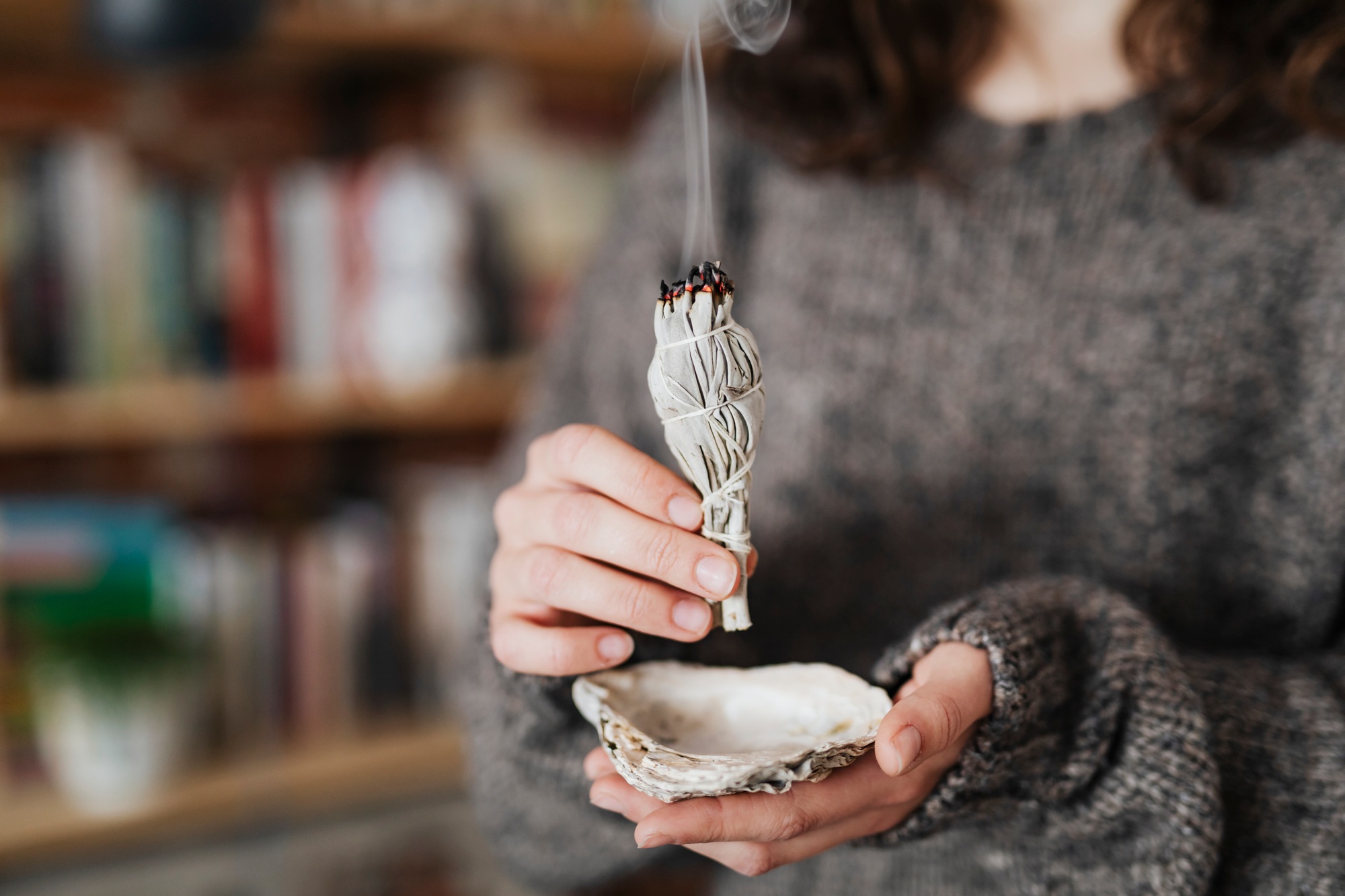
To sage a house: open a window in every room, light a sage bundle until it smolders, then walk your whole home clockwise from the front door, guiding the smoke into corners, doorways and closets while you say what you want the space to hold. Finish by letting the bundle go out in a fireproof dish. In an average home the whole thing takes about fifteen minutes.
Saging is a simple ritual, but doing it with real intention rather than just waving smoke around is what makes it meaningful. Below is the full method: which herbs to choose, what to say in each room, what the research actually supports, and how to practice it respectfully, since white sage smudging comes from Indigenous traditions that are still living practices today.
The short version
Explore the Resource Center
Browse our full library of free worksheets, meditation scripts, and PDF guides. Visit the Resource Center →
How to Sage a House
If you’re wondering how to sage your home spiritually, follow these simple but meaningful steps. Regular cleaning sweeps away dust, but smudging resets the invisible background atmosphere. Focus on presence and respect for the natural materials.
Gather Your Materials
Before beginning your ritual, assemble your clearing toolkit. You’ll need a high-quality sage bundle (such as ethically sourced white sage or common garden sage leaves), a fireproof bowl, stone shell, or clay dish to catch falling ash, a pack of matches or a lighter, and optionally, a feather to help guide and spread the smoke trails gracefully.
Set Your Intention
Energy responds to conscious direction. Before lighting your bundle, take three deep, centering diaphragmatic breaths. Ask yourself: “Why am I choosing to sage this house today?” Define your purpose clearly. You may choose to state your intention silently or speak it aloud: “I release what no longer serves this home, and welcome in peace, clarity, and ease.”
Open Windows and Doors
Allowing heavy, stagnant energy to exit your home is just as critical as welcoming fresh energy in. Crack open a window or door in every room you intend to smudge. This ensures a healthy cross-breeze, letting smoke carry lingering stress out of your living space and keeping the air feeling light.
Light the Sage
Hold your sage bundle at a downward 45-degree angle. Light the tip evenly and allow it to burn for roughly 10–15 seconds until a small flame catches. Gently blow out the active flame, allowing the leaves to smolder and release a steady, fragrant stream of cleansing smoke. If it stops smoking, blow softly onto the embers to reignite the slow burn.
Move Through Your Space Clockwise
Begin near the primary entryway or front door of your home. Walk slowly and deliberately, moving in a clockwise direction through each room. Carefully wave the warm smoke into high corners, over door frames, around window sills, and into dark closets. Pay extra attention to high-traffic areas, corners, and spots that feel heavy or sluggish.
Speak Your Intention While Clearing
As you carry the smoldering sage through each room, verbally anchor your intention. Repeat your chosen mantra slowly and clearly. Allow your voice to carry your physical boundary into the physical environment. (Use our interactive script generator below to customize a phrase that aligns with your household goals).
Complete the Ritual Safely
Once you have walked through your entire house and returned to your starting point, gently press the smoldering tip of your bundle into your fireproof dish, sand, or dirt until the embers are completely extinguished. Never leave a burning bundle unattended. Take one final deep breath, express gratitude for your refreshed home, and enjoy the renewed space.
Practices to Deepen the Ritual:
- ✦ Invite a friend or partner to sage together, sharing your visions and intentions aloud.
- ✦ Combine with mindful journaling: write down what you are releasing and what you are welcoming.
- ✦ Put on soft, atmospheric music or a gentle chant to guide your breathing pace.
Different Types of Sage and Herbal Blends

Different cultivars and herbal combinations offer unique aromatic signatures and therapeutic properties. Depending on your current energetic or environmental needs, you can choose a specific blend to personalize your clearing ritual:
1. White Sage (Salvia apiana)
The most traditional smudging plant, recognized for its heavy, complex, and deeply purifying smoke. Highly potent for major environmental shifts, resetting dense energy, or clearing a new home.
2. Blue Sage (Salvia clevelandii)
Offers a lighter, sweeter, and more herbaceous aroma. It is widely used to encourage peace, deep meditation, and spiritual balance, making it perfect for daily home maintenance.
3. Desert Sage (Artemisia tridentata)
A wild, warm, and earthy shrub that carries clean, sharp notes of pine. Excellent for promoting resilience, building strong boundaries, and clearing emotional exhaustion.
4. Common Sage (Salvia officinalis)
Your everyday garden sage. This accessible, leafy alternative has a comforting, culinary scent and is highly effective for mental clarity, environmental refresh, and quick intention-setting.
Mixing Sage with Complementary Herbs:
Does Saging a House Work? (The Science & Psychology)
You might wonder if saging a house really does anything, or if it’s just another “flashy feel-good” trend. But neuroscience and psychology suggest otherwise: rituals like saging can shift not only the energy in a space, but also your brain state and nervous system.1 Burning sage, or smudging, taps into both ancient spiritual tradition and modern psychological benefit, engaging your senses, anchoring you in the present, and activating parasympathetic calm.2
1. Neuroscience
Rituals like saging activate sensory pathways and signal safety to the brain, moving us into a parasympathetic (“rest-and-digest”) state.3
2. Psychology
Repetitive, intentional actions have been shown to calm anxiety, create a sense of control, and regulate emotions.4
3. Sensory Grounding
The combination of breath, movement, and aroma in saging promotes presence, reducing dissociation and grounding awareness.5
Can Saging a House Make It Worse?
While burning herbs is highly therapeutic for most, there are scenarios where saging can be counterproductive or physically harmful. Understanding these parameters ensures you maintain a healthy environment:
Smoke of any kind is an irritant. Avoid burning sage inside your home if you, your family members, or your pets have active respiratory issues like asthma, chronic bronchitis, or severe allergies. Smoke can aggravate airways and worsen lung inflammation.
If you want to clear your home without using fire, try using water-based aromatherapy sprays containing real sage essential oils, ringing brass sound bowls, spreading coarse salt in room corners, or opening windows wide to let natural airflow refresh the space.
Respectful Use of Sage
White sage is sacred in many Indigenous traditions. If using it, do so with respect and awareness of its cultural roots. Consider sourcing from ethical, sustainable growers or exploring similar traditional practices like ethically sourced palo santo, rosemary, or garden lavender.
What Does Saging a House Do?
Saging isn’t just about cleansing a home, it’s about creating space for connection, clarity, and presence. Whether you do it alone or with others, it invites a deeper awareness of how we show up in the spaces we inhabit.
Saging the house creates a shift in the energetic field of your home. From a spiritual perspective, saging helps cleanse the aura of a space, making room for healing, clarity, and renewal. It clears unwanted energy such as stress, emotional residue, or conflict, and invites a more peaceful, balanced environment.
On a physical level, sage has antimicrobial properties that may help purify the indoor air quality of your home.6
The Benefits of Burning Sage
The benefits of burning sage leaves extend far beyond spiritual cleansing. Here are the most recognized advantages:
01. CLEARS NEGATIVE ENERGY
One of the most well-known benefits of burning sage is its ability to clear stagnant or negative energy. This can be especially useful after an argument, physical illness, or when moving into a brand-new space.
02. FRESH AIR
Scientifically, burning sage leaves releases negative ions into your immediate environment. These negative ions can neutralize positive ions, helping to clear out airborne allergens, dust particles, and minor pollution.8 While not a replacement for proper outdoor ventilation, it adds another clean layer of environmental wellness.
03. ENHANCES MENTAL CLARITY
Burning sage leaves can support mental focus and emotional clarity. The aroma itself has been found to stimulate certain receptors in the brain, improving mood, concentration, and cognitive rest.7
04. PROMOTES CALM AND MINDFULNESS
Cleansing your house can be a deeply meditative practice. The slow, visual movement of the white smoke combined with intentional deep breathing creates a structured pocket of stillness, presence, and focus in your day.
05. SUPPORTS RITUAL AND INTENTION SETTING
Whether used during daily yoga, personal reflection, or weekly home resets, burning sage leaves serves as a clear physical gateway to your internal focus, setting the baseline tone for intention-based living.
Benefits of Burning Sage Leaves
Burning sage leaves specifically, as opposed to using sprays or synthetic incense, is considered the most traditional and energetically potent method. Sage leaves carry the raw essence of the plant. When burned, they produce a rich, cleansing smoke that interacts directly with your home. The act of lighting and waving the burning sage leaf becomes a physical extension of your intention, an embodied ritual that merges breath, visual focus, and conscious direction.
What to Say When Saging Your House
Whether you are looking for secular affirmations, grounding cues, or a mindful saging a house prayer, having a written blueprint helps focus your energy. Use this interactive builder to select your intention:
“I release this home from the past and welcome what’s to come.”
Interactive Room Hotspots
Practical Room Advice
Every room serves a different purpose. From high-traffic entryways to quiet rest spaces, each zone benefits from a tailored focus during your household refresh. Click a node on the map to find simple steps, scent recommendations, and practical suggestions for area.
When to Sage Your House
You can burn sage at any time, but here are moments when saging your home is especially impactful:
- ✦ After a major life change: Moving into a new home, starting a new job, birth, loss, or a relationship transition.
- ✦ After illness or conflict: Clearing physical germs and emotional tension after a tough cold or a difficult argument.
- ✦ Before or after guests visit: Resetting the communal social space so that everyone feels welcomed and comfortable.
- ✦ Seasonal resets: Shifting and refreshing the energy of the home during spring cleaning or deep seasonal updates.
Integrating the Practice of Saging Into Everyday Life
Saging a house is a deeply personal practice. Whether you are drawn to it for its spiritual significance, its grounding benefits, or its calming aroma, the act of burning sage creates a sacred pause, a reconnection between you and your environment. The benefits of burning sage, especially sage leaves, extend into the emotional, spiritual, and energetic layers of our homes and lives.
If you’ve ever wondered “what does saging your house do?” or “how to sage a house properly,” let this guide serve as your invitation. You don’t need to get it perfect. All that’s required is presence, intention, and respect for the process.
Key Takeaways
- ✓ Engages Senses & Calms Stress: Saging activates focus by grounding your attention, helping clear stress.
- ✓ Clears Stagnant Atmosphere: Cleanses emotional residue to invite harmony, balance, and visual clarity back into rooms.
- ✓ Antimicrobial Support: Scientifically, burning herbs purifies the air by neutralizing static allergens.
- ✓ Practice with Awareness: Respect the cultural background of smudging, source ethically, and customize intentions.
Scientific References & Sources:
- Perry, N. S. L., et al. (2010). Inhalation of essential oil from Salvia species and its effect on memory and mood in healthy adults. International Journal of Neuroscience, 120(6), 404–409. Link
- McGarry, J., Russo-Netzer, P., & Shoshani, A. (2021). The Role of Rituals in Wellbeing: Integrating Spiritual, Psychological, and Physiological Perspectives. Journal of Humanistic Psychology.
- Frontiers in Psychology (2020). Interoception, Vagal Activity, and Emotional Regulation: A Systematic Review. Link
- Kotera, Y., Richardson, M., & Sheffield, D. (2020). Effects of Shinrin-yoku (forest bathing) on mental health: A meta-analysis. Link
- Shaw, C., et al. (2018). Labyrinth walking for mental focus and relaxation: A pilot study. Link
- Papageorgiou, V. P., et al. (2014, reviewed 2023). Salvia officinalis L.: Antioxidant and antimicrobial properties. International Journal of Molecular Sciences. Link
- Nautiyal, B. P., et al. (2022). Traditional Use of Smoke for Air Disinfection and Its Efficacy Against Airborne Microbes. Environmental Health Insights. Link
- Scientifically, burning dry sage leaves releases negative ions, which can temporarily neutralize positive allergens.
Frequently Asked Questions
What is saging, and why do people do it?
Saging (also called smudging) is the practice of burning dried sage and wafting the smoke through a space, traditionally used to cleanse negative energy and promote a sense of calm and renewal. It’s rooted in various Indigenous traditions and has become popular more broadly in wellness practices.
Does burning sage have any scientifically documented benefits?
Some research has found that burning sage can reduce airborne bacteria and that its aroma may have calming effects, though most claims about “clearing negative energy” fall outside what science can measure directly. Many people report a genuine felt sense of calm regardless.
How do I sage my house properly?
Common practice involves opening windows for airflow, lighting the sage bundle until it smolders (not flames), and moving intentionally through each room, especially corners, while focusing on your intention for the space, then extinguishing it safely in a fireproof dish.
Is it disrespectful to sage your home if you’re not part of an Indigenous culture?
This is a genuinely debated topic. Many Indigenous communities consider white sage a sacred plant tied to specific ceremonial traditions, and using it without cultural context can be seen as appropriation. Some people choose alternative herbs (like rosemary or lavender) as a more culturally neutral option.
What’s the difference between this guide and the one on smudging your house?
This guide and our companion piece on how to smudge your house cover the same core practice from slightly different angles, worth reading together.
Related resources

How to Smudge Your House: Cleanse, Bless, and Protect Your Home

The Feelings Wheel | List of Feelings – Understanding Your Emotional Intelligence

List of Feelings: 91 Words for What You’re Actually Feeling (Free PDF)

Feelings Wheel Activities: A Four-Week Workbook You Can Print

Neuro-Somatic Educator • Founder, Conscious Cues
Jordan Buchan is the founder of Conscious Cues and a Neuro-Somatic Educator whose work focuses on the process of turning insight into lived experience. She helps people move beyond simply understanding themselves and into embodying real change so what they know begins to shape how they feel, respond, and live.

Psychologist • Certified Kundalini Yoga Instructor
Manuel Alejandro Patiño is a psychologist and certified Kundalini yoga instructor who works where clinical psychology, somatic practice and contemplative tradition meet. He is a certified practitioner of heart-rate variability biofeedback and pulse analysis. He reviews Conscious Cues resources for clinical accuracy.